
July 5, 2026
ChaosWalker: A Post-Exhaustion Architecture for Exploring Massive Password Spaces
When dictionary, rule, and mask attacks are exhausted, password cracking becomes a search problem rather than a counting problem. This paper introduces ChaosWalker — structured probabilistic sampling over partitioned keyspaces.
Modern password cracking systems have achieved remarkable efficiency in cryptographic verification through GPU acceleration. Tools such as Hashcat can evaluate billions of password candidates per second for fast hashes and thousands per second for computationally intensive key-derivation functions. Despite these advances, candidate generation strategies remain largely unchanged.
The traditional model
Typical workflows follow a sequential strategy: dictionary attacks, rule engines, mask attacks, and finally brute-force enumeration. This pipeline prioritises high-probability candidates early and works extremely well for human-generated passwords.

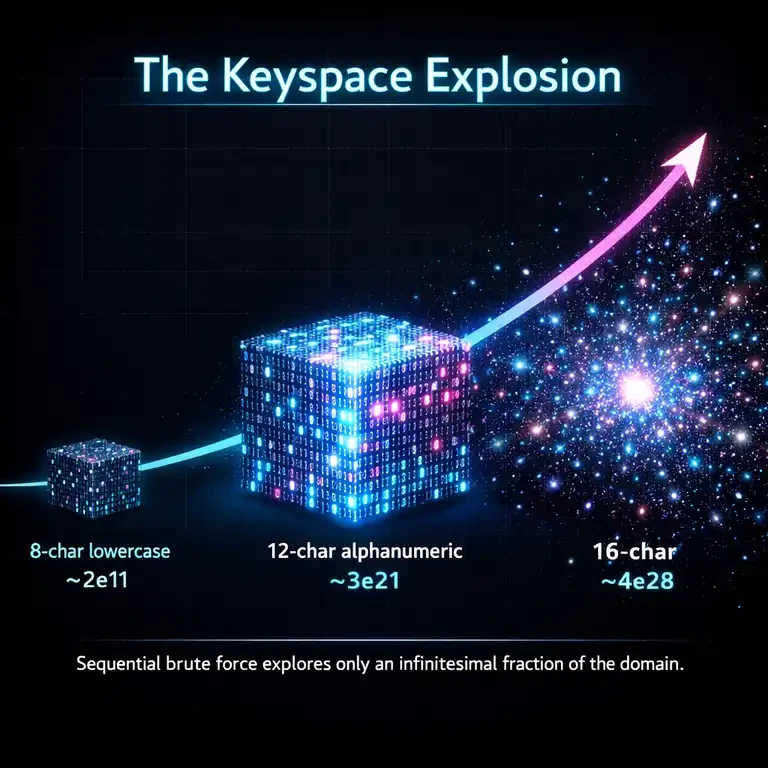
When the keyspace explodes
The number of possible passwords grows exponentially with length and character diversity. An 8-character lowercase password has roughly 2×10¹¹ combinations; a 16-character alphanumeric password reaches roughly 4×10²⁸. Even at extremely high testing rates, sequential brute force explores only an infinitesimal fraction of such domains.
The real problem
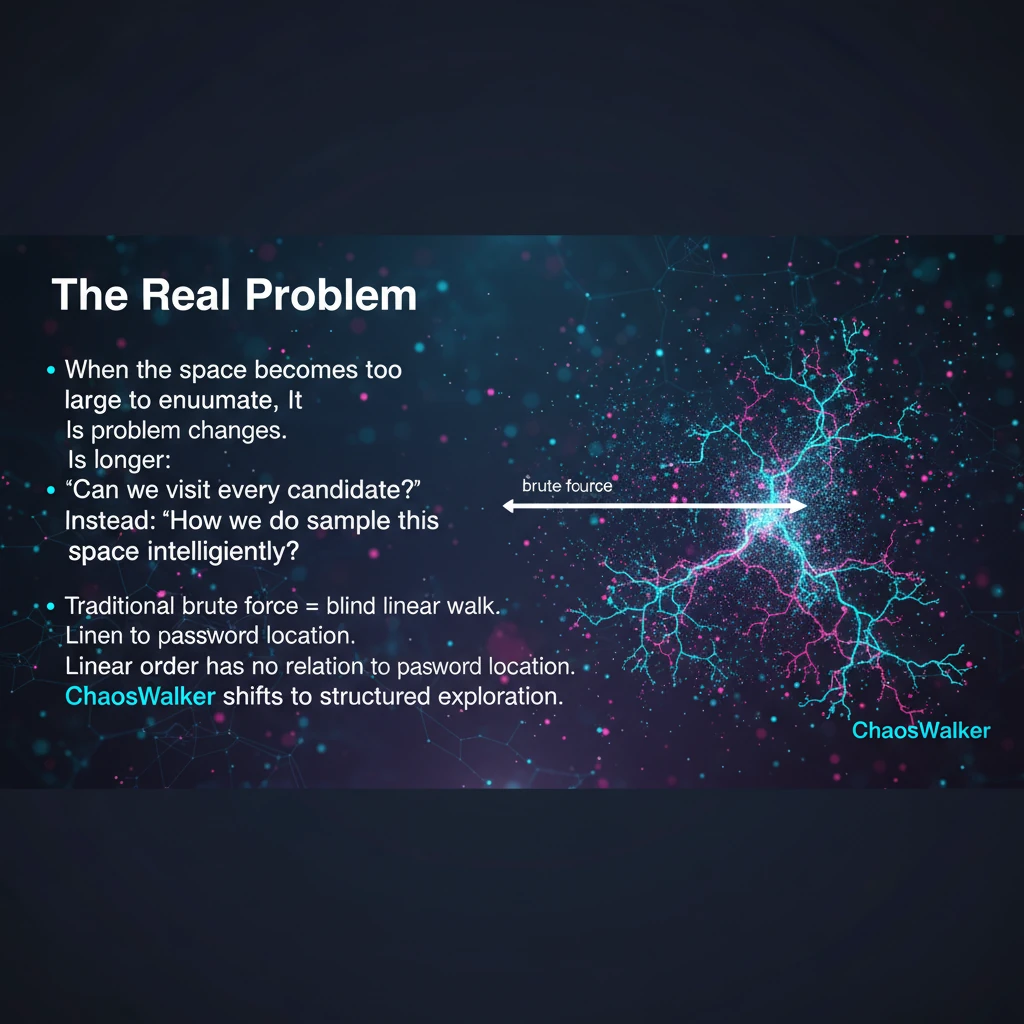
Once conventional attack strategies are exhausted, the remaining search space becomes astronomically large. The challenge shifts from verifying candidates quickly to selecting which candidates should be tested at all.
Linear traversal provides no probabilistic advantage. Exhaustive search becomes impossible. Sequential ordering has no relation to password location. The problem becomes one of efficient sampling rather than exhaustive enumeration.
ChaosWalker architecture
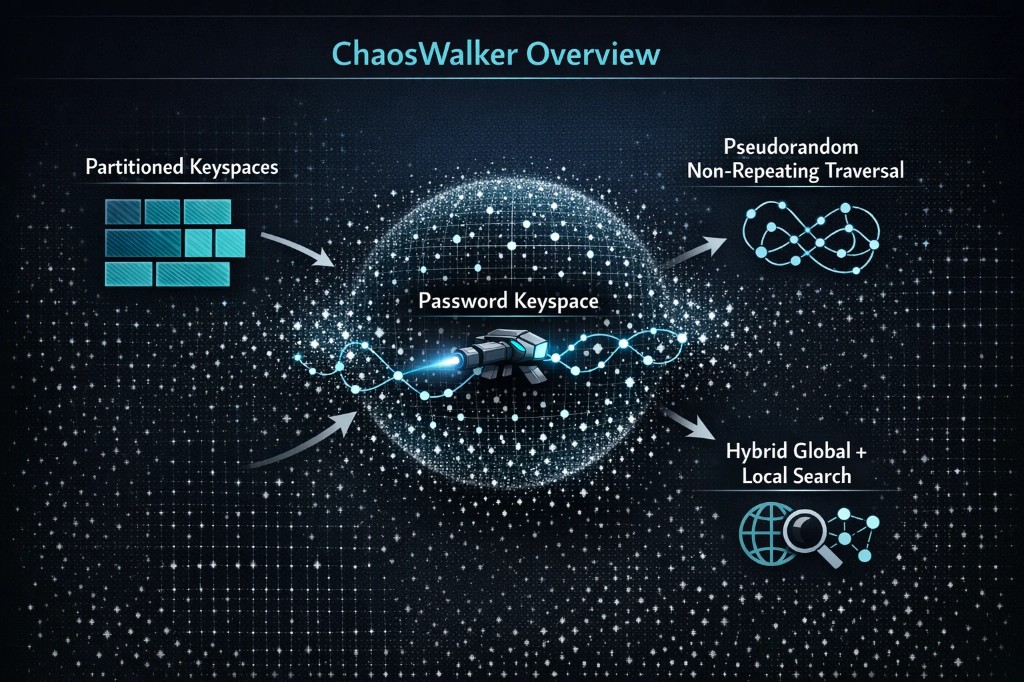
ChaosWalker introduces a post-exhaustion exploration framework designed for password spaces that cannot be fully searched. Three components work together:
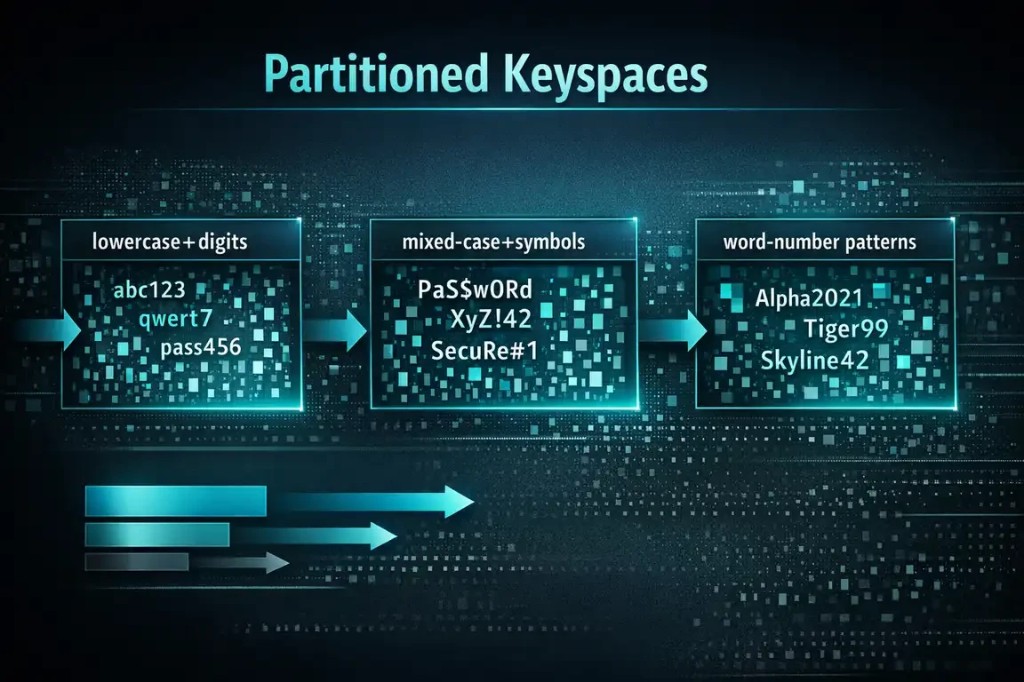
- Partitioned keyspace architecture — the global space is divided into structural partitions (length, charset, word-digit patterns) with weights reflecting estimated probability.
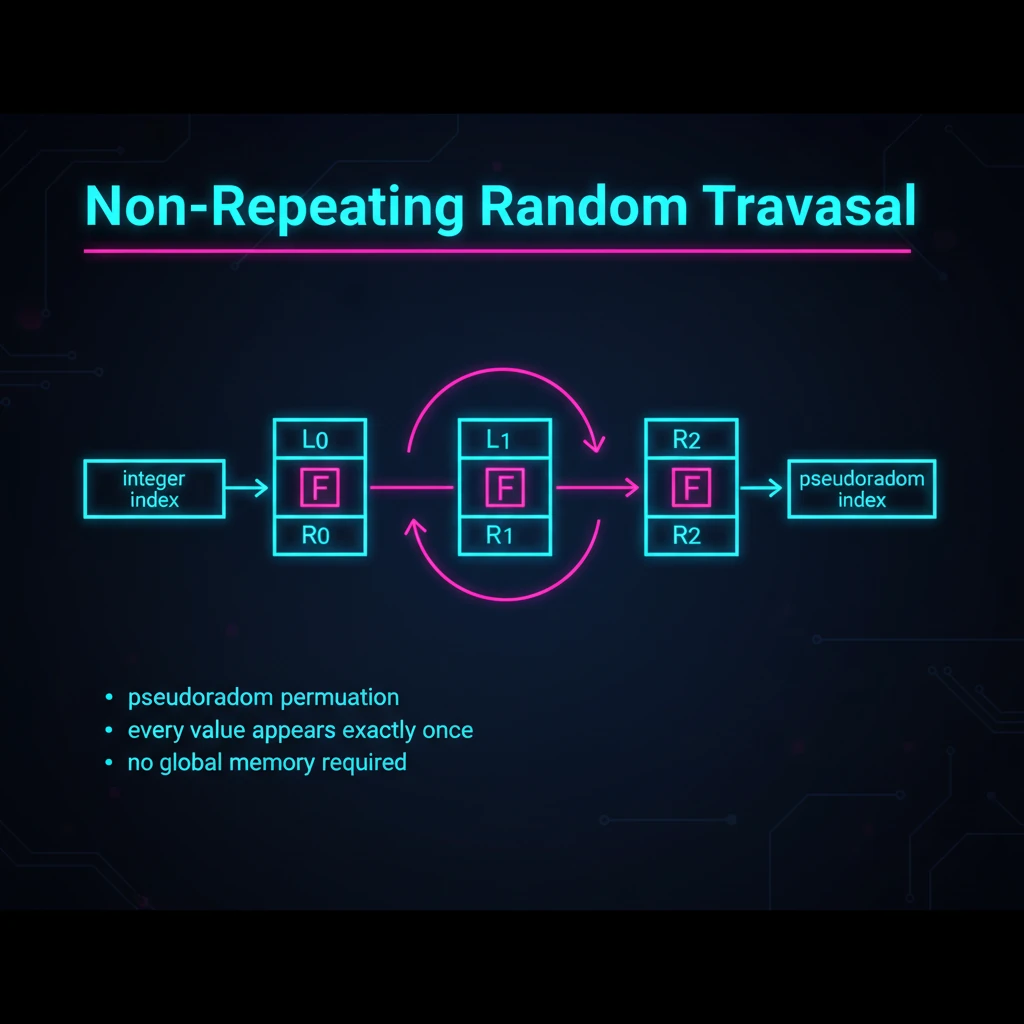
- Feistel-based pseudorandom traversal — within each partition, a Feistel permutation maps a counter to a pseudorandom index. Every candidate appears exactly once with constant memory overhead.
- Hybrid global and local search — global sampling provides wide coverage; local mutations explore neighbouring regions; a Bloom filter prevents redundant evaluation.

Decoupled verification
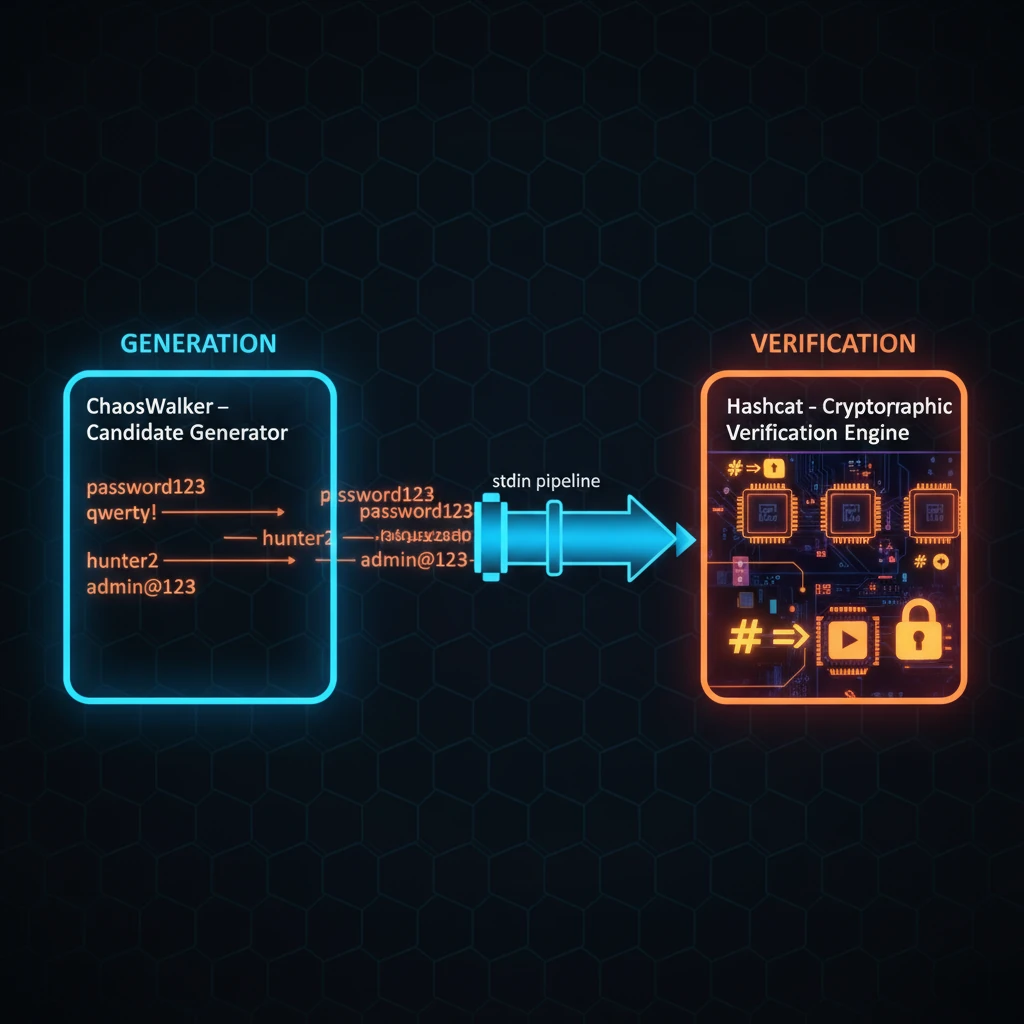
A key architectural principle is the separation of candidate generation from cryptographic verification. ChaosWalker streams generated candidates to external verification engines — such as Hashcat — through standard input/output pipelines. Each component specialises: ChaosWalker generates the candidate stream; established tools perform GPU-optimised hash verification.
Why this matters
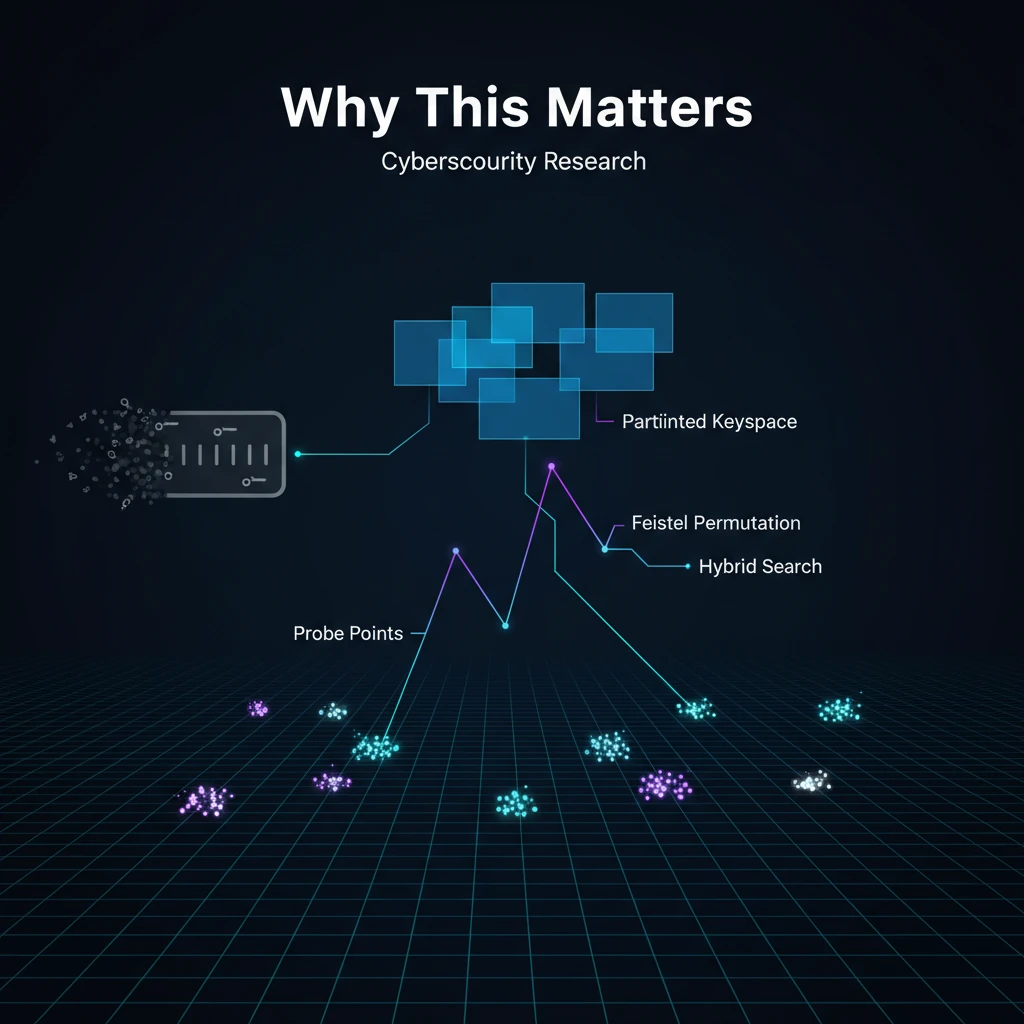
As password entropy increases and randomly generated credentials become more common, traditional cracking strategies encounter search spaces that cannot be enumerated. ChaosWalker proposes structured probabilistic sampling as an alternative paradigm — combining partitioned keyspaces, Feistel traversal, and localised heuristic exploration to investigate domains that would otherwise remain inaccessible.
Future work
Future directions include adaptive partition weighting, integration with probabilistic password models, machine-learning guidance, and empirical evaluation of search efficiency across large-scale password datasets.